
Advanced therapies for chronic pain: holistic healing guide
Chronic pain affects millions of Americans, yet the default advice still points toward prescription drugs or surgery. That assumption is outdated. Advanced therapies now include regenerative medicine, photobiomodulation, neuromodulation, and shockwave treatments that work without cutting, numbing, or suppressing your body's natural processes. For people in Northern Nevada who want real answers without the side effects, this guide breaks down how these therapies work, what the research actually shows, and how to build them into a holistic wellness plan that fits your life.

Table of Contents
- Understanding advanced therapies: What sets them apart?
- Core advanced therapies for chronic pain and inflammation
- Personalizing therapy: What the evidence and experts suggest
- Benefits and limitations: What does the research really show?
- Integrating advanced therapies into holistic healing plans
- Ready to experience holistic, advanced healing?
- Frequently asked questions
Key Takeaways
| Point | Details |
|---|---|
| Non-invasive alternatives | Advanced therapies provide effective, low-risk options beyond drugs and surgery for pain and inflammation. |
| Tailored for you | Best results come from choosing therapies based on your unique diagnosis and holistic health needs. |
| Evidence-backed benefits | Modern research supports the safety and efficacy of these therapies for many chronic pain conditions. |
| Integrative care works best | Combining advanced therapies with lifestyle, rehabilitation, and holistic coaching enhances outcomes. |
Understanding advanced therapies: What sets them apart?
Conventional pain management often relies on anti-inflammatory drugs, opioids, or surgical intervention. These approaches can be necessary in some cases, but they rarely address the root cause of pain. Advanced therapies take a different route. Instead of masking symptoms, they work with your body's own repair systems to reduce inflammation, restore function, and rebuild damaged tissue.
The non-invasive therapies overview at Agapé Healing & Wellness captures this shift well. Rather than suppressing the body, these therapies stimulate it. Here are the main categories you'll encounter:
- Regenerative medicine: Includes platelet-rich plasma (PRP), prolotherapy, and viscosupplementation. These therapies use biological materials to trigger healing responses in joints and soft tissue.
- Photobiomodulation (PBM): Also called cold laser therapy, this uses specific light wavelengths to boost cellular energy and reduce inflammation.
- Non-invasive neuromodulation: Techniques like transcranial magnetic stimulation (TMS) and transcranial direct current stimulation (tDCS) target the brain and nervous system to interrupt pain signals.
- Shockwave and EMTT: Mechanical energy delivered to tissue to stimulate repair, especially in tendons and muscles.
Demand for these options is growing fast. People are tired of side effects and want solutions that support long-term health. The advanced therapies for chronic pain research base has expanded significantly, with multiple meta-analyses now confirming meaningful benefits across these categories.
Core advanced therapies for chronic pain and inflammation
Now that we know the main categories, here's how each advanced therapy actually works and where it fits best.
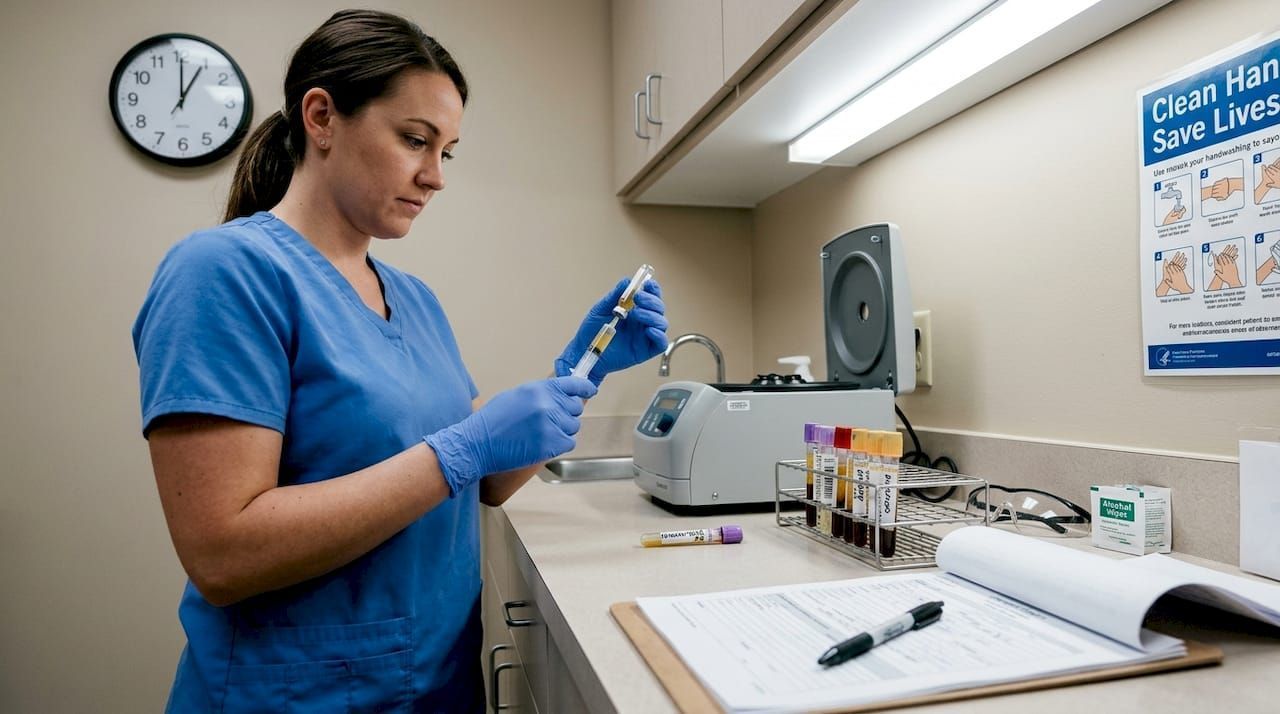
Platelet-rich plasma (PRP) is drawn from your own blood, concentrated, and injected into the affected area. It releases growth factors including PDGF and TGF-β, which promote tissue repair and reduce inflammation at the cellular level. PRP works best for knee osteoarthritis, tendon injuries, and early joint degeneration.
Viscosupplementation involves injecting hyaluronic acid directly into a joint, most commonly the knee. It restores lubrication and cushioning. The effect is modest but the safety profile is strong, making it a reasonable option for people who cannot tolerate other treatments.
Photobiomodulation (PBM) uses low-level laser or LED light to stimulate mitochondria inside cells, increasing ATP (cellular energy) production. This reduces oxidative stress and inflammation. It's particularly effective for tendonitis, fibromyalgia, and soft tissue injuries. PBM reduces pain and fatigue with moderate certainty for fibromyalgia, and the number needed to treat (NNT) for rTMS in neuropathic pain is 4.2, which is competitive with many medications.
Non-invasive neuromodulation targets the nervous system rather than the tissue itself. TMS uses magnetic pulses to modulate brain activity, while tDCS uses mild electrical current. These are especially useful for central sensitization, where the nervous system itself has become overactive in generating pain signals.
Shockwave therapy and EMTT deliver mechanical or electromagnetic energy to damaged tissue. They're widely used for plantar fasciitis, calcific tendinitis, and chronic muscle pain. Sessions are short, and most people notice improvement within a few treatments.
Here's a quick comparison to help you see where each therapy fits:
| Therapy | Mechanism | Best for | Evidence level |
|---|---|---|---|
| PRP | Growth factor release | Joint pain, tendon injuries | Moderate to strong |
| Viscosupplementation | Joint lubrication | Knee OA | Moderate |
| Photobiomodulation | ATP stimulation | Fibromyalgia, tendonitis | Moderate |
| Neuromodulation (TMS/tDCS) | Neuroplasticity modulation | Neuropathic pain, central sensitization | Moderate |
| Shockwave/EMTT | Mechanical stimulation | Tendon and muscle pain | Moderate |
Pro Tip: No single therapy works for everyone. The best therapies for pain depend on your specific diagnosis, tissue type, and how long you've been dealing with the condition. A personalized protocol always outperforms a one-size-fits-all approach.
Personalizing therapy: What the evidence and experts suggest
While each therapy has strengths, the right approach hinges on personalizing treatment to your needs.
Therapy selection should account for your diagnosis, the severity of your condition, your health goals, and your personal preferences. What works well for someone with early knee osteoarthritis may not be the right fit for someone dealing with fibromyalgia or nerve pain.
For PRP specifically, optimal concentration is 600 to 900 x10^9/L, and high-leukocyte PRP should generally be avoided for joint conditions because it can increase inflammation rather than reduce it. PRP also works best for early to moderate OA (KL grades I to III), not advanced joint destruction.
For PBM, dosing matters enormously. The therapy is dose-dependent, meaning too little light energy won't reach the target tissue, and too much can actually inhibit the response. It also tends to work better for chronic conditions than acute injuries, which surprises many people.
Here are key factors to consider when personalizing your plan:
- Diagnosis accuracy: Advanced imaging or functional testing helps confirm the right target tissue.
- Condition stage: Early to moderate conditions generally respond better than end-stage degeneration.
- Lifestyle factors: Sleep, nutrition, and stress levels all affect how well your body responds to regenerative therapies.
- Response monitoring: Not everyone responds the same way. Track your outcomes after each session and adjust accordingly.
Experts consistently emphasize that non-invasive first-line approaches should be tried before escalating to more invasive options. The pain solutions in 2026 landscape strongly favors this personalized, stepwise model.
Pro Tip: Keep a simple pain and function journal during your treatment. Note your pain level, sleep quality, and activity tolerance after each session. This gives your provider real data to refine your protocol.
Benefits and limitations: What does the research really show?
With so many options, it's vital to weigh the proven benefits against possible limits before choosing.
The benefits are real and well-documented. PRP outperforms hyaluronic acid and corticosteroids for pain relief at 6 to 12 months in knee osteoarthritis. PBM reduces pain and fatigue with moderate certainty for fibromyalgia. Neuromodulation is most effective as a later-stage option when other therapies haven't delivered enough relief.
Here's a summary of what the research shows:
| Therapy | Key benefit | Limitation |
|---|---|---|
| PRP | Superior to HA/CS at 6-12 months | Variable response, higher upfront cost |
| PBM | Reduces pain and fatigue | Dose sensitivity, not for all conditions |
| Neuromodulation | Effective for neuropathic pain | Cost, access, best as later-stage option |
| Shockwave/EMTT | Fast results for tendon pain | Limited long-term data |
The limitations are worth knowing too. Guidelines remain inconclusive for several of these therapies due to study heterogeneity, meaning different trials use different protocols, making direct comparisons difficult. Not every patient responds, and some therapies carry higher costs than conventional options.
That said, the safety profiles across all these therapies are generally excellent. Side effects are mostly local and temporary. No systemic risks like those associated with long-term NSAID or opioid use. For people who want to explore holistic vs conventional benefits, the risk-to-benefit ratio strongly favors trying advanced therapies first.
Integrating these therapies with lifestyle changes, physical therapy, and nutrition can also amplify results. The pain reduction data supports this combined approach.
Integrating advanced therapies into holistic healing plans
After weighing the options, here's how to safely and effectively bring advanced therapies into your own holistic health plan.
Combining advanced therapies with physical therapy or lifestyle changes enhances outcomes and reduces the chance of being a non-responder. Here's a practical step-by-step approach:
- Get a thorough assessment. Work with a provider who understands both conventional diagnostics and holistic health. Know your diagnosis before choosing a therapy.
- Choose your primary therapy. Based on your condition, select the most evidence-supported option. For joint pain, PRP or viscosupplementation. For soft tissue or fibromyalgia, PBM. For nerve-driven pain, neuromodulation.
- Build your support stack. Add physical therapy, anti-inflammatory nutrition, and stress management practices like breathwork or mindfulness. These aren't optional extras. They're part of what makes the therapy work.
- Set a monitoring schedule. Reassess every 4 to 6 weeks. If you're not seeing improvement, adjust the protocol rather than continuing blindly.
- Stay consistent. Most advanced therapies require multiple sessions. Expect 4 to 12 sessions depending on the therapy and condition severity.
Pro Tip: Ask your provider about their experience with your specific condition, not just the therapy in general. A provider who has treated dozens of people with your diagnosis will personalize your protocol far more effectively.
The comprehensive wellness approach and chronic pain management resources at Agapé Healing & Wellness offer additional guidance on building this kind of integrated plan.
Ready to experience holistic, advanced healing?
If you've been managing chronic pain with medications that only partially work, or you're trying to avoid surgery, advanced therapies offer a genuinely different path. The research is solid, the safety profiles are strong, and the results for the right candidates are meaningful.
At Agapé Healing & Wellness, we offer non-invasive, evidence-informed therapies including red light therapy, Cellsonic Therapy, Terahertz Wand treatments, and detox foot baths, all tailored to your specific health goals. Our wellness coaching options help you build the nutrition, movement, and lifestyle foundation that makes every therapy more effective. Whether you're just starting to explore alternatives or you're ready to build a full holistic plan, we're here to support you every step of the way. Reach out today to schedule your personalized consultation.
Frequently asked questions
Which advanced therapy works fastest for chronic pain?
Photobiomodulation reduces pain promptly for soft tissue and tendon conditions, often within a few sessions. PRP, by contrast, works through a biological repair process that can take several weeks to months before full benefits appear.
Are advanced therapies safe for everyone?
Most advanced therapies carry a low risk profile, with contraindications mostly limited to local reactions or specific medical conditions. Always consult a qualified provider before starting any new therapy, especially if you have underlying health issues.
How do advanced therapies compare to traditional medication?
PRP outperforms corticosteroids and hyaluronic acid for pain relief at 6 to 12 months with no systemic side effects. Medications can provide faster short-term relief, but advanced therapies tend to offer more durable results for the right conditions.
Can these therapies be combined with holistic practices?
Absolutely. Combining advanced therapies with holistic lifestyle practices like physical therapy, nutrition, and mind-body work consistently produces better long-term outcomes than any single therapy used alone.
Recommended