
Comprehensive Wellness: Transforming Whole-Body Health

For many American adults, chronic pain and persistent toxins quietly erode day-to-day vitality. In Carson City, a growing number of health-conscious individuals are choosing holistic, non-invasive therapies that treat the whole person, not just symptoms. With the World Health Organization reporting over 70 percent of people struggle to achieve complete mental and physical well-being, the search for comprehensive wellness is more urgent than ever. Discover how holistic health strategies can help restore balance and unlock your body’s true potential.
Table of Contents
Key Takeaways
| Point | Details |
|---|---|
| Comprehensive Wellness | Emphasizes a holistic view of health that includes physical, mental, and social well-being. |
| Multi-Dimensional Wellness | Incorporates physical, emotional, intellectual, spiritual, social, environmental, occupational, financial, and cultural dimensions for a full understanding of health. |
| Holistic Therapies | Focus on natural healing methods that support the body’s innate ability to heal and promote self-empowerment. |
| Personalized Wellness Plans | Tailor health strategies based on individual needs and root causes rather than generic treatments. |
Defining Comprehensive Wellness and Holistic Health
Comprehensive wellness represents a revolutionary approach to health that transcends traditional medical perspectives. The World Health Organization’s holistic definition emphasizes health as more than just the absence of disease, viewing it as a complete state of physical, mental, and social well-being.
This multidimensional framework recognizes that human health is intricate and interconnected. Unlike reductive medical models that focus solely on treating symptoms, comprehensive wellness examines the entire human experience. Pillars for Positive Health research identifies six critical domains essential to understanding whole-person wellness: bodily functions, daily functioning, mental wellbeing, quality of life, social participation, and personal meaningfulness.
At its core, holistic health acknowledges that wellness emerges from complex interactions between physiological, psychological, and social systems. This approach empowers individuals to view health proactively, considering lifestyle factors like nutrition, exercise, stress management, emotional balance, and social connections. By understanding these interconnected elements, people can develop personalized strategies that support optimal functioning across all dimensions of human experience.
Below is a comparison of traditional medical care and holistic wellness approaches:
| Aspect | Traditional Medical Care | Holistic Wellness Approach |
|---|---|---|
| Primary Goal | Symptom treatment | Address root causes, whole person |
| Focus | Disease absence | Well-being in multiple domains |
| Methods Used | Medication, surgery | Lifestyle, therapies, prevention |
| Patient Role | Passive recipient | Active participant, self-empowered |
Pro tip: Start tracking your wellness across multiple domains by creating a simple weekly journal that documents your physical activity, emotional state, social interactions, and personal sense of meaning.
Core Dimensions of Wellness: Physical, Mental, and More
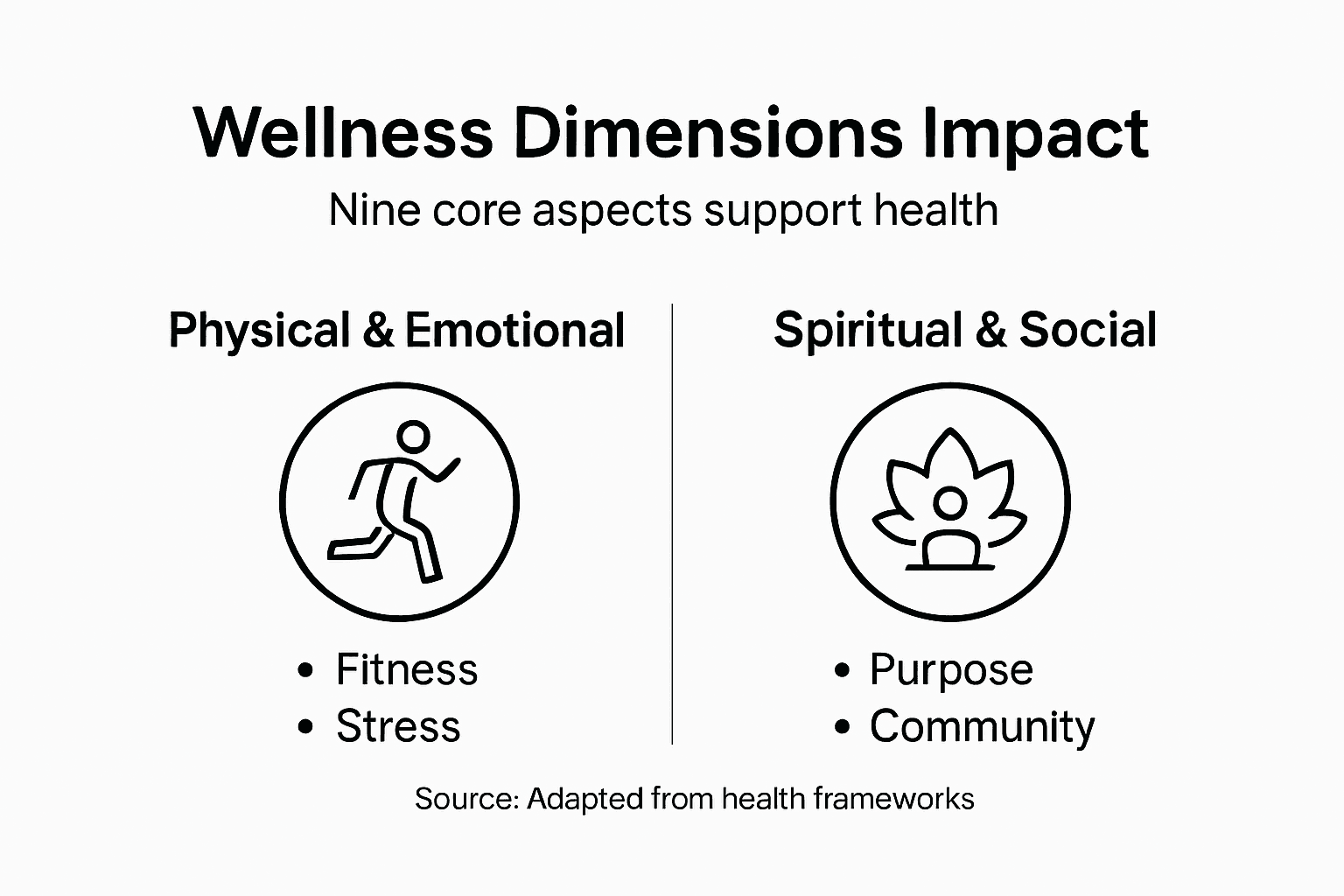
Wellness is a complex, multifaceted concept that extends far beyond traditional health metrics. Nine interconnected dimensions of wellness reveal the intricate nature of human potential, encompassing physical, emotional, intellectual, spiritual, social, environmental, occupational, financial, and cultural aspects of our lived experience.
Each dimension represents a critical component of holistic health. Physical wellness involves maintaining cardiovascular fitness, nutritional balance, and bodily strength. Emotional wellness centers on understanding and managing feelings, developing resilience, and maintaining psychological equilibrium. Intellectual wellness encourages continuous learning, critical thinking, and mental stimulation through creative pursuits, academic exploration, and personal growth challenges.

Spiritual wellness explores an individual’s sense of purpose, meaning, and connection to something larger than themselves. This might manifest through meditation, philosophical contemplation, community engagement, or personal values alignment. Social wellness emphasizes building meaningful relationships, communication skills, and the ability to create supportive networks that contribute to emotional and psychological well-being. Environmental wellness involves understanding our relationship with nature, making sustainable choices, and recognizing how our surroundings impact our overall health.
Pro tip: Create a personal wellness wheel and evaluate your satisfaction in each dimension, then develop targeted strategies to improve areas that feel less balanced.
Here is a summary of the nine dimensions of wellness and how each supports holistic health:
| Wellness Dimension | Key Focus Area | Impact on Health |
|---|---|---|
| Physical | Fitness, nutrition, strength | Improves energy and disease prevention |
| Emotional | Self-awareness, resilience | Supports mental and mood stability |
| Intellectual | Learning, creativity | Enhances cognitive abilities |
| Spiritual | Purpose, values, meaning | Fosters sense of fulfillment |
| Social | Relationships, support networks | Strengthens psychological well-being |
| Environmental | Nature, sustainability | Reduces stress, improves safety |
| Occupational | Job satisfaction, productivity | Boosts overall life satisfaction |
| Financial | Money management, security | Eases stress, improves access |
| Cultural | Identity, inclusion | Increases sense of belonging |
Holistic Therapies and Natural Healing Methods
Holistic therapies represent a transformative approach to health that goes beyond traditional medical treatments. The World Health Organization’s strategy on integrative medicine emphasizes the critical role of natural healing methods in addressing chronic diseases and mental health conditions that conventional biomedicine often struggles to resolve effectively.
Natural healing modalities encompass a wide range of therapeutic approaches designed to support the body’s innate healing mechanisms. Aromatherapy and essential oils stand out as powerful holistic strategies, utilizing plant-derived compounds to alleviate psychological and physiological symptoms. These approaches work by targeting the whole person—addressing physical discomfort, emotional imbalances, and spiritual well-being simultaneously. Techniques like acupuncture, herbal medicine, massage therapy, and energy healing offer alternative pathways to wellness that complement traditional medical treatments.
The core philosophy of holistic therapies centers on viewing the human body as an interconnected system, where physical, emotional, and spiritual health are deeply intertwined. This approach recognizes that true healing involves more than simply treating symptoms—it requires understanding and addressing the root causes of health challenges. Holistic practitioners focus on supporting the body’s natural resilience, promoting self-healing mechanisms, and empowering individuals to take an active role in their health journey.
Pro tip: Research and consult with a qualified holistic practitioner to develop a personalized wellness plan that integrates multiple natural healing approaches tailored to your specific health needs.
Personalized Wellness Plans and Root Cause Care
Personalized medicine in functional healthcare represents a revolutionary approach to wellness that goes beyond traditional one-size-fits-all medical treatments. By recognizing the unique biological differences of each individual, this method creates tailored health strategies that address underlying causes rather than simply managing surface-level symptoms.
The core principle of root cause care involves comprehensive patient assessment that examines multiple interconnected factors. This includes detailed analysis of an individual’s health history, genetic predispositions, lifestyle patterns, environmental influences, and specific physiological markers. Functional medicine care plans are meticulously crafted to restore balance by identifying and addressing the fundamental sources of health challenges, rather than applying generic interventions.
Personalized wellness plans typically incorporate a holistic blend of strategies designed to support whole-body health. These may include targeted nutrition protocols, customized exercise recommendations, stress management techniques, supplements tailored to individual biochemistry, and lifestyle modifications that support long-term healing. The goal is not just symptom resolution, but creating sustainable health transformations that empower individuals to take proactive control of their wellness journey.
Pro tip: Document your current health status, symptoms, and lifestyle factors before consulting a functional medicine practitioner to facilitate a more comprehensive and personalized assessment.
Benefits, Common Pitfalls, and Choosing Providers
Wellness programs offer transformative potential, but understanding their nuanced landscape is critical for making informed healthcare decisions. Consumers increasingly seek science-backed, data-driven solutions that provide measurable improvements in overall health and well-being, demanding greater transparency and evidence of effectiveness from wellness providers.
The benefits of comprehensive wellness programs can be substantial when implemented correctly. Key advantages include personalized health strategies, proactive disease prevention, holistic symptom management, and enhanced quality of life. However, wellness support services reveal significant challenges such as variability in service quality, accessibility limitations, and potential misalignment with individual needs. Potential pitfalls range from overpromising results to implementing one-size-fits-all approaches that fail to address unique individual health contexts.
Selecting the right wellness provider requires careful evaluation. Critical factors include verifying professional credentials, assessing evidence-based methodologies, understanding treatment philosophies, and ensuring alignment with personal health goals. Potential red flags include providers making extraordinary claims without scientific substantiation, charging excessive fees, or pushing treatments without comprehensive patient assessment. Effective provider selection involves researching professional backgrounds, requesting detailed treatment plans, and seeking recommendations from trusted healthcare professionals.
Pro tip: Request comprehensive documentation of a wellness provider’s qualifications, patient outcomes, and treatment methodologies before committing to any program.
Empower Your Journey to Comprehensive Wellness Today
If you are seeking a truly holistic approach that goes beyond symptom treatment and embraces root cause care, Agapé Healing & Wellness in Carson City, Nevada, is here to support your transformation. This article highlights the need for personalized wellness plans addressing the complex, interconnected aspects of physical, emotional, and social well-being. Our center specializes in non-invasive therapies like Cellsonic Therapy and Red Light Therapy designed to enhance cellular repair, reduce inflammation, and relieve chronic pain while complementing your lifestyle changes.
Experience the power of integrated, natural healing techniques combined with advanced technology at Agapé Healing & Wellness. Take control of your health with a tailored program focused on holistic health and whole-person wellness. Start your journey today by exploring our comprehensive therapy options and discover how personalized care can help you achieve lasting vitality. Visit us now to schedule your consultation and unlock a healthier, more balanced life.
Frequently Asked Questions
What is comprehensive wellness?
Comprehensive wellness is an approach to health that focuses on the whole person, integrating physical, mental, and social aspects of well-being rather than just treating symptoms of disease.
What are the core dimensions of wellness?
The core dimensions of wellness include physical, emotional, intellectual, spiritual, social, environmental, occupational, financial, and cultural aspects of health, all of which are interconnected and essential for overall well-being.
How do personalized wellness plans differ from traditional medical care?
Personalized wellness plans focus on identifying and addressing the root causes of health issues specific to each individual, while traditional medical care typically concentrates on treating symptoms with standard interventions.
What are some examples of holistic therapies and natural healing methods?
Examples of holistic therapies include acupuncture, herbal medicine, aromatherapy, massage therapy, and energy healing. These methods seek to support the body’s natural healing processes and address both physical and emotional health.
Recommended